
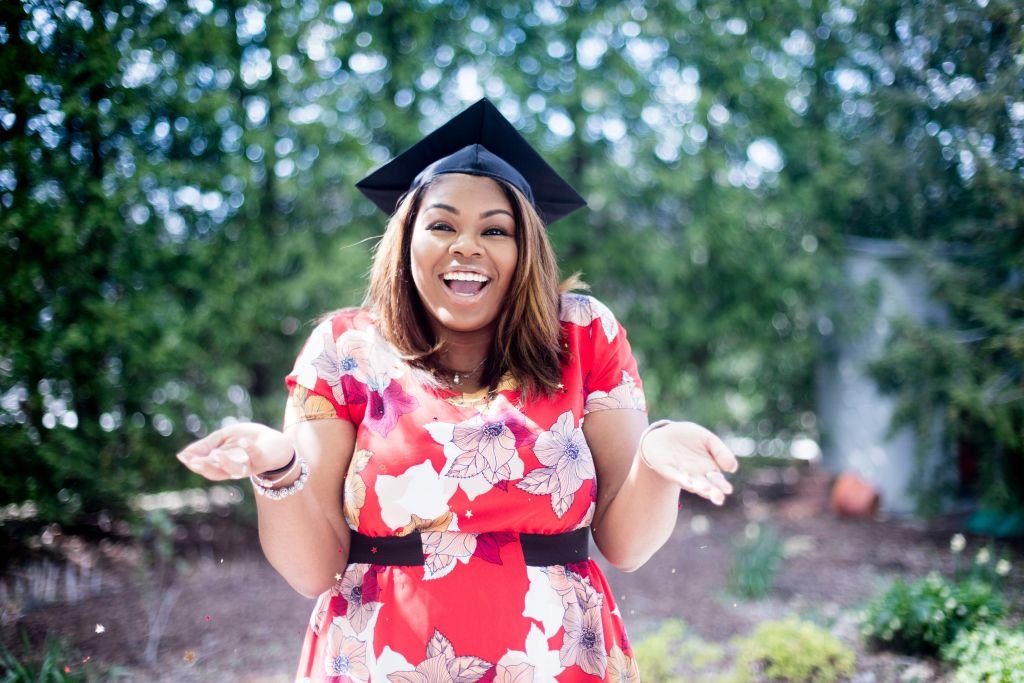
A friend once shared with me the inspirational story of how she became the first girl in her extended family to attend university. Her mother gave birth to her at the age of sixteen. Her grandmother, aunties, and even great-aunties all had children in their teens. For generations, motherhood had arrived too early; during a time when girls should have been discovering themselves, not raising children. Parenting in her family wasn’t just an adult responsibility, it was a generational pattern for minors.
But she was determined to be different.
She found her inspiration not at home, but in school, among peers whose parents were professionals: bankers, doctors, engineers, and teachers. She couldn’t help but compare her life to theirs. Their families seemed financially stable, aspirational, and full of hope, completely different from what she knew. That comparison sparked a fire in her. If her classmates could dream big and work towards progressing into higher education, why couldn’t she? While no one in her family believed she could make it, least of all her mother, she pressed on. With support from her teachers and encouragement from other parents in her school community, she applied to the university. Against all odds, she was accepted, becoming the first female university student in her family’s history.
Her first major appearance was at the family’s summer holiday reunion. It was just after her first year of university. The celebration that year was different. This time, the focus was on her. For the first time in a long time, the family had something new to celebrate, something that wasn’t a baby shower or a rushed wedding. Her achievement radiated through the room. Congratulations poured in. She wasn’t just a guest at the party, she was the heart of the party.
She became a symbol of hope, a model for possibility, and a point of reference. Her younger cousins started to see another version of their future. They said things like, “If she can do it, so can we.” And they did! Many handed over parenting duties to their mothers and grandmothers, and went back to school. Today, her family is proudly raising its third generation of university graduates. A simple comparison; one girl seeing herself in someone else’s world, changed the entire trajectory of a family.
This is the power of social comparison at its best: a catalyst for change, a motivator for self-improvement, and a vision of what’s possible. But not all comparisons are constructive.
Another friend shared the darker side of social comparison. She avoids her high school reunions, not because she holds grudges or dislikes her classmates, but because every time she sees their updates on social media, she feels like a failure. It’s been more than thirty years since graduation, and in those years, social media has become the lens through which she sees her peers. Through that lens, everyone seems to be thriving: buying homes, traveling the world, achieving career goals. And her own life, viewed against that backdrop, feels small and disappointing.
She knows these comparisons sap her confidence. They make her withdraw. She has decided to stay connected only online, avoiding in-person reunions because she fears her life won’t measure up. This is the peril of social comparison, a force that can shrink our self-worth and limit our capacity for joy.
What Is Social Comparison?
At its core, comparison means identifying similarities or differences between two or more things. It’s a skill we use daily, comparing prices of basic household items across shops and different brands. Social comparison specifically involves evaluating ourselves in relation to others, based on social or contextual information. It’s not a new concept; it’s a deeply entrenched human trait. From early childhood, we observe and measure ourselves against peers to make sense of who we are. And it continues all through life.
We do this in two different ways: upward social comparison is when we compare ourselves to people we perceive as being more successful, attractive, or accomplished, while downward social comparison is when we compare ourselves to those we perceive as less successful or underprivileged. Both types of comparison can be meaningful and even beneficial, if approached with the right mindset.
Upward social comparison can help us visualize what’s possible. It can inspire us to work harder, aim higher, and become better versions of ourselves. However, if not managed well, it can also leave us feeling inadequate or envious. One of my friends experienced the power, and another, the peril of upward social comparison.
Downward social comparison, on the other hand, can help us cultivate the attitude of gratitude and contentment. It reminds us of our blessings and keeps us grounded. But taken to an extreme, it can also breed complacency or a false sense of superiority.
In many ways, comparison is a natural and necessary part of growth. It helps us measure progress, set goals, and seek belonging. But it becomes harmful when it leads to persistent dissatisfaction, envy, or a distorted self-image.
This distorted reality can wreak havoc on our self-esteem. Comparing our authentic, messy lives to someone else’s airbrushed fantasy is not only unfair, it’s emotionally dangerous. It leads to a false sense of failure and can contribute to anxiety, depression, and social withdrawal.
Social media has intensified the frequency and scope of social comparison. Platforms like Instagram, Facebook, and TikTok provide a curated stream of other people’s lives, highlight reels filled with smiles, achievements, and picture-perfect moments. It’s easy to forget that these are highlights, not the full picture.
Yet many users, including adults, take these portrayals at face value, judging their personal growth by what they see. If we as parents are still rattled by social comparison, we can imagine the pressure on the younger generation. This is a call to action. It is our responsibility to teach them the power of social comparison for driving growth and it’s peril which leads to distress.
How can we teach them healthy social comparison?
Firstly, we have to let them know the difference between real and virtual lifestyles. That most of what they see on social media is fake and shouldn’t be used as a basis for comparison. They cannot measure their behind-the-scenes life against someone else’s highlight reel.
They must learn to compare with clarity and for the right reason and must remember that as individuals our journeys are different. Everyone has a different starting line, different obstacles, and different paths in life.
That social comparison should be used for the right reasons: to motivate, encourage, inspire, and not for validation. They should compare ourselves to others only when it serves a meaningful purpose; when it drives growth or deepens understanding. And they should make a conscious effort to compare apple to apple, not reality to illusion.
They should use upward social comparison to learn and engage in self-development. There’s nothing wrong in comparing yourself to the smartest student in your class if her diligence impacts you positively. Likewise, they should use downward social comparison to practise gratitude always. Their focus should be on constant self-improvement.
Personal Reflection
Comparison is a skill we practise right from childhood. We use it to develop our critical thinking skills and to make a choice between alternatives. As adults, we compare when we view homes, when we buy cars and other major assets. We are constantly comparing features and benefits even in our everyday purchases. Our choice of where to work, where to save, how to invest are taken after comparing our options.
Comparison helps us make the best choice based on the information we have. There is therefore a natural inclination in us as humans to compare. We can’t get rid of this attribute but we can be intentional with its use when it concerns social information because unhealthy social comparison is a killer of joy.